

About the House
Our Legacy
An intriguing journey through the roads of historic Rajasthan — in search of true heritage jewellery.
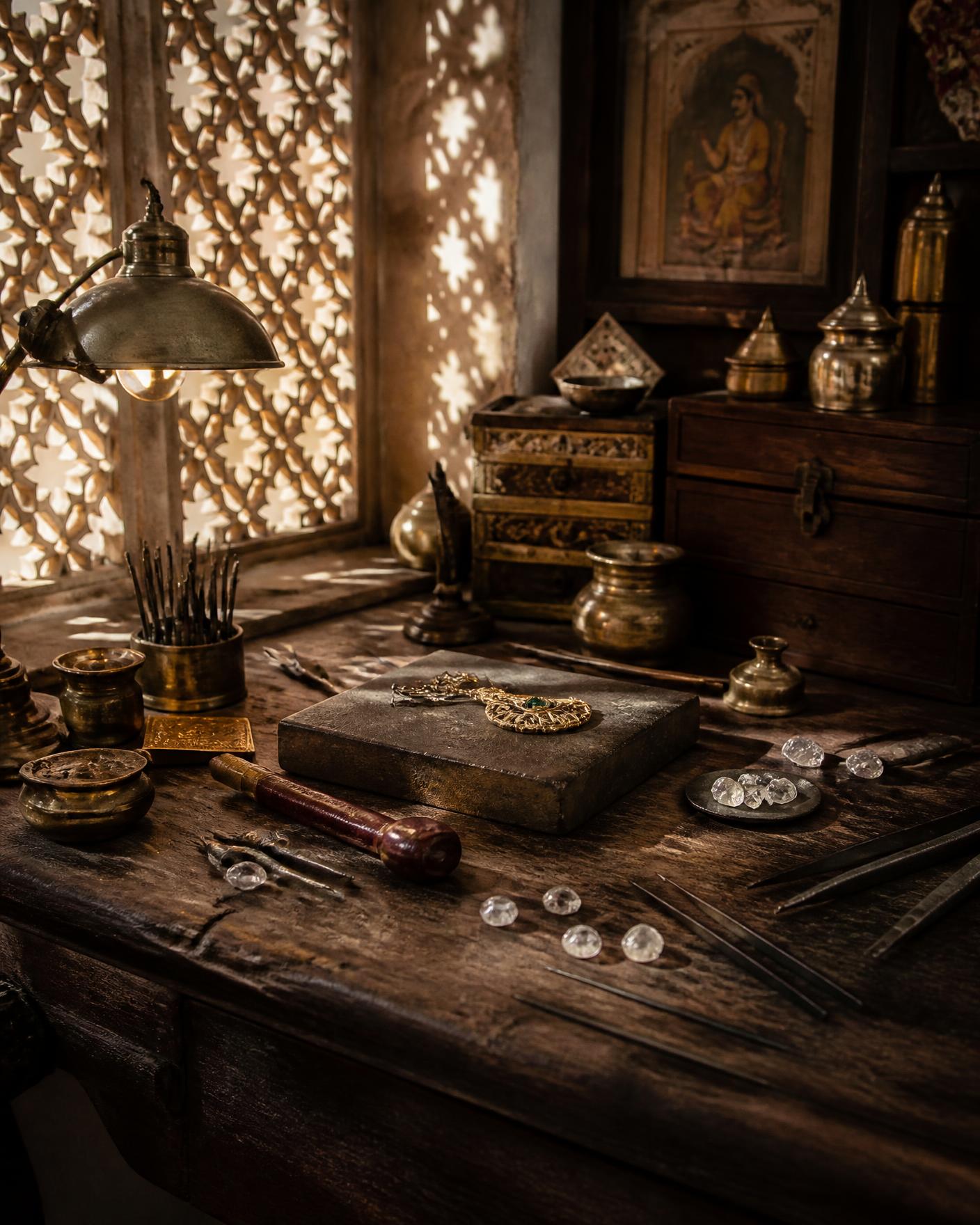
The Journey
Unveiling the heritage of Rajasthan to the world.
The journey of KOTHARI JEWELS is an intriguing one. We walked through the roads of historic Rajasthan in search of true heritage jewellery — and found a calling: to unveil our rich cultural heritage to the world.
We have dedicated twenty years of creative learning to bring the finest quality pieces to market. Based in the Royal City of Jaipur, we wish to transform the retail space to be more transparent and authentic for our esteemed clientele.
20+
Years of creative learning
Two decades devoted to bringing jewels of uncompromising quality to market.
Jaipur
The Royal City
Rooted in Rajasthan, where we walked historic roads in search of true heritage jewellery.
Trust
Transparent & authentic
A retail experience reimagined — honest, open and personal for every patron.
The Family Behind the House
Meet the Directors
Two couples, one family — joined by a shared belief in heritage, detail and honest craft.

Directors
Prateek & Shilpa Kothari
“There is no greater accomplishment than to deconstruct problems, weigh out solutions, and work towards future prospects.”
Prateek and Shilpa have dedicated their lives to blending progressive thinking with cultural values — within the family as well as the KJ management.

Directors
Piyush & Poonam Kothari
“The beauty of jewels is in the minute details. Though these details are small, they are capable of very big things.”
Strong, creative thinkers, Piyush and Poonam understand the value of perfecting nuance — producing jewels with a voice of their own.
The KJ Fam
“It’s not the years in your life that count; it’s the life in your years.”
Our family lives by this. We place true relationships and emotional bonds at the heart of everything we do. Resonating with someone’s pain is the quickest way to heal it — and we always choose love over hate.
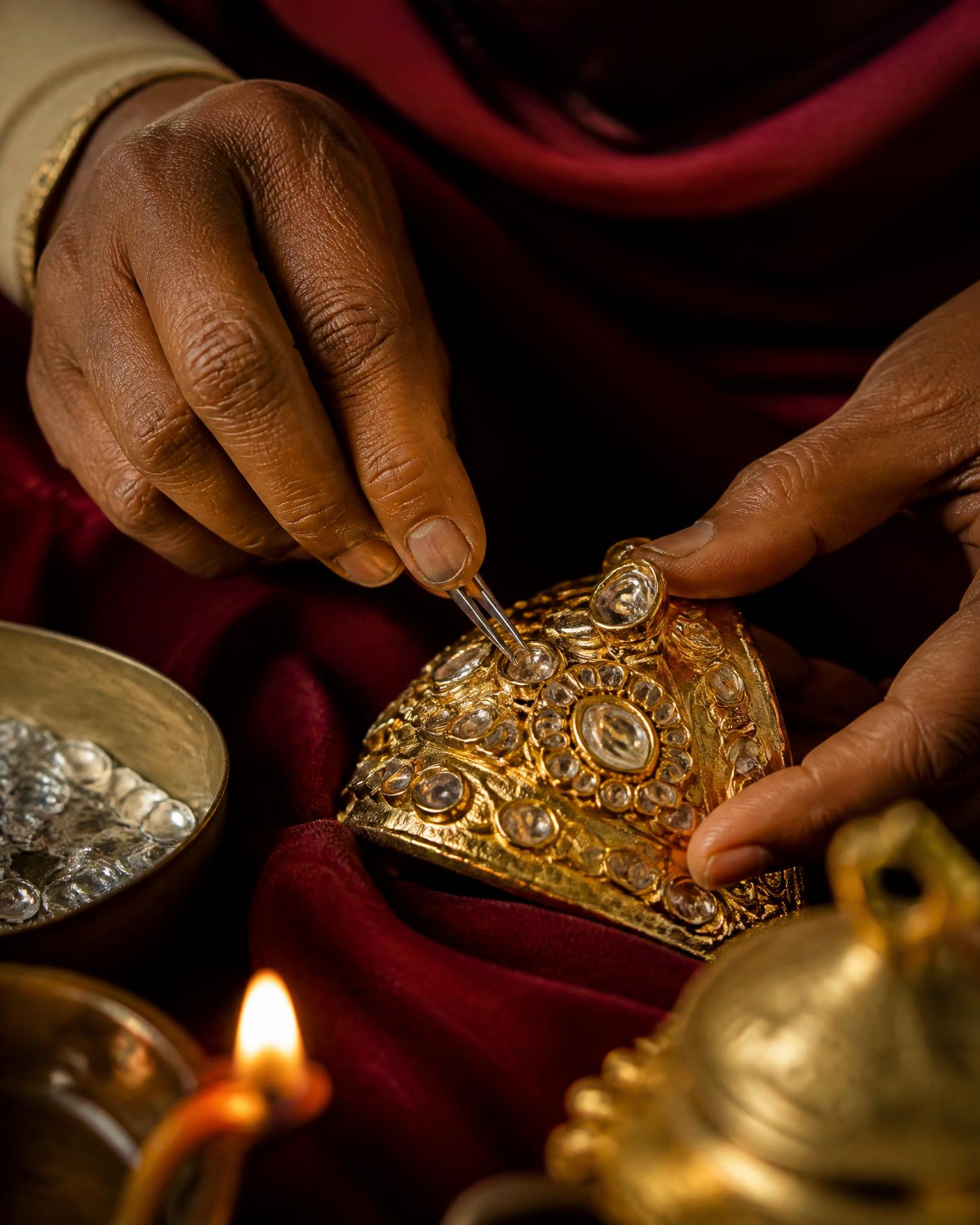
An Heirloom, Up Close
Turn it in your hands
Drag to rotate. Every facet is considered — because the details are capable of very big things.